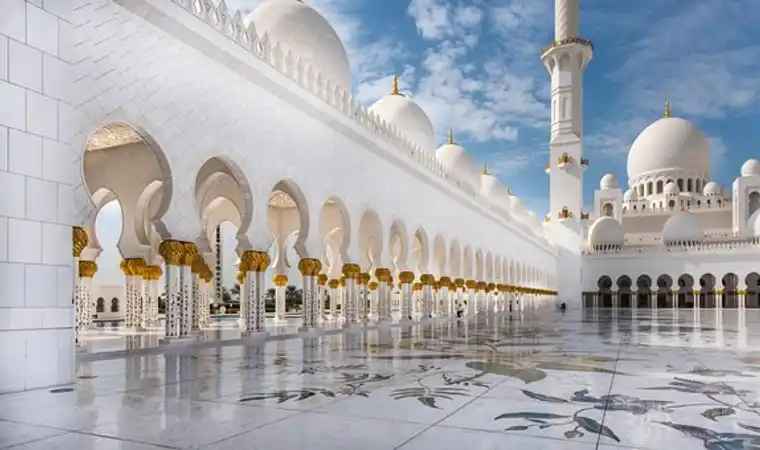
Islamic worship is not limited to ritual prayer performed five times a day. It encompasses a complete system of devotion, conduct, and intention that shapes every aspect of a Muslim's life, from morning to night, from personal ethics to community obligations.
What Islamic Worship Actually Means
The Arabic term for worship in Islam is ibadah. It is broader than the English word suggests. Ibadah covers any act performed with sincere intention for the sake of Allah — prayer, fasting, charity, honest speech, and even how a person earns and spends money.
The Prophet Muhammad (peace be upon him) described intention as the foundation of every act:
> "Actions are judged by intentions, and every person will get the reward according to what he intended." (Sahih al-Bukhari, Book 1, Hadith 1)
This single hadith reframes what counts as worship. A meal shared with a needy neighbor, when done sincerely, carries spiritual weight equal to a formal act of devotion.
The Five Pillars: Structure of Worship
The Five Pillars of Islam are the non-negotiable framework. They are not suggestions or cultural practices — they are obligations with specific conditions, timing, and method.
| Pillar | Arabic Term | Frequency / Condition |
|---|---|---|
| Declaration of Faith | Shahada | Once in a lifetime (sincere belief) |
| Prayer | Salah | 5 times daily |
| Almsgiving | Zakat | Annually (if nisab threshold is met) |
| Fasting | Sawm | Ramadan (29–30 days per lunar year) |
| Pilgrimage | Hajj | Once in a lifetime (if physically and financially able) |
Each pillar has a body of hadith literature governing its conditions. For example, Zakat is only obligatory when a Muslim possesses wealth above the nisab threshold — approximately 85 grams of gold or 595 grams of silver — for a full lunar year. In 2026, this translates to roughly $8,000–$8,500 USD at current gold rates, though scholars advise verifying with a local Islamic center annually.
Salah: The Architecture of Daily Prayer
Salah is the most visible form of Islamic worship and the one most directly tied to hadith instruction. The Prophet did not merely command prayer — he demonstrated it precisely.
"Pray as you have seen me praying." (Sahih al-Bukhari, Book 11, Hadith 631)
This hadith established that the method of prayer is transmitted through practice, not only text. Muslim scholars spent centuries recording the exact postures, recitations, and sequences the Prophet used.
The five daily prayers and their time windows:
- Fajr — between pre-dawn and sunrise
- Dhuhr — after the sun passes its zenith until mid-afternoon
- Asr — mid-afternoon until sunset
- Maghrib — immediately after sunset until twilight disappears
- Isha — from the disappearance of twilight until midnight (some scholars say until Fajr)
Missing a prayer without a valid excuse is considered a serious matter. A prayer missed due to sleep or forgetfulness must be made up as soon as the person remembers — this is established in Sahih Muslim (Book 5, Hadith 1570).
Conditions that must be met before prayer:
- Purity (tahara) — physical cleanliness through wudu or ghusl
- Covering of the awrah — private parts, with different rulings for men and women
- Facing the qibla — direction of the Kaaba in Mecca
- Time — prayer performed outside its window without excuse is not accepted
- Intention (niyyah) — conscious decision to perform the specific prayer
Wudu: Ritual Purification Before Prayer
Wudu is the ablution performed before prayer. It is detailed in Surah Al-Maidah (5:6) and expanded in numerous hadith narrations. The sequence matters — it is not simply washing hands and face in any order.
Standard sequence of wudu:
- Intention (silent)
- Wash both hands three times
- Rinse the mouth three times
- Inhale water into the nose and blow it out, three times
- Wash the face three times
- Wash both arms up to the elbows, three times, right then left
- Wipe the head once (wet hand passed over the hair)
- Wipe the ears once
- Wash both feet up to the ankles, three times, right then left
Wudu is invalidated by sleep, using the toilet, passing gas, loss of consciousness, and certain other conditions. When water is unavailable or its use would cause harm, tayammum (dry ablution using clean earth or dust) is permitted.
Fasting in Ramadan: More Than Hunger
Sawm during Ramadan is often explained as abstaining from food and drink from Fajr to Maghrib. That is accurate but incomplete. Islamic fasting also prohibits sexual relations during fasting hours and requires avoidance of lying, backbiting, and offensive speech.
The Prophet said: "Whoever does not give up false speech and acting upon it, Allah has no need of his giving up food and drink." (Sahih al-Bukhari, Book 31, Hadith 127)
This hadith makes clear that Ramadan fasting is a full behavioral discipline, not a diet.
Who is exempt from fasting:
- Children before puberty
- The elderly who cannot physically fast
- Travelers (may delay fasting, make it up later)
- Pregnant or nursing women (may delay or pay fidya)
- Those with chronic illness that makes fasting medically dangerous
Fidya — a monetary compensation — applies when fasting cannot be made up. In 2026, the amount is calculated based on the cost of feeding one poor person per missed day, typically $5–$10 USD depending on regional food costs.
Zakat: Worship Through Wealth
Zakat is often misunderstood as optional charity. It is obligatory, has a fixed rate (2.5% of eligible wealth held for one lunar year), and its recipients are specified in Quran 9:60.
Eight categories eligible to receive Zakat:
| Category | Description |
|---|---|
| Al-Fuqara | The poor |
| Al-Masakin | The destitute |
| Al-Amileen | Zakat administrators |
| Al-Muallafat Quloobuhum | Those whose hearts are to be reconciled |
| Al-Riqab | To free those in bondage |
| Al-Gharimeen | Those in debt |
| Fi Sabilillah | For the cause of Allah |
| Ibn Al-Sabil | Stranded travelers |
Sadaqah (voluntary charity) is separate from Zakat and carries no fixed amount or schedule. Many Muslims give sadaqah daily in small forms — helping a neighbor, removing an obstacle from a road, sharing knowledge.
Dhikr and Dua: Informal Daily Worship
Beyond the formal pillars, Islamic worship includes continuous remembrance of Allah (dhikr) and personal supplication (dua). These are not structured rituals but ongoing practices recommended throughout the day.
Common forms of dhikr recorded in hadith include:
- Subhanallah (Glory be to Allah) — 33 times after each prayer
- Alhamdulillah (Praise be to Allah) — 33 times after each prayer
- Allahu Akbar (Allah is the Greatest) — 34 times after each prayer
The Prophet said: "Two phrases are light on the tongue, heavy on the scale, and beloved to the Most Merciful: Subhanallahi wa bihamdihi, Subhanallahil Azeem." (Sahih al-Bukhari, Book 81, Hadith 131)
Dua can be made at any time, in any language, in any position. It is one of the most personal aspects of Islamic worship and requires no intermediary.
Hajj: Worship at Scale
Hajj takes place in Dhul Hijjah, the twelfth lunar month, specifically on the 8th–13th days. The rites follow a sequence established by the Prophet during his Farewell Pilgrimage in 632 CE.
Core rites of Hajj:
- Ihram — entering a state of ritual consecration at a designated miqat boundary
- Tawaf — circumambulating the Kaaba seven times counterclockwise
- Sa'i — walking seven times between the hills of Safa and Marwa
- Wuquf at Arafat — standing in supplication on the 9th of Dhul Hijjah (the essential pillar)
- Muzdalifah — overnight stay and collection of pebbles
- Rami — stoning of the jamarat (symbolic rejection of evil)
- Sacrifice — Qurbani, commemorating Ibrahim's willingness to sacrifice his son
- Halq or Taqsir — shaving or trimming hair, marking partial exit from ihram
Missing the Wuquf at Arafat invalidates the entire Hajj. This is documented in the hadith: "Hajj is Arafat." (Sunan Abu Dawood, Book 10, Hadith 1949)
Islamic Ethics as an Extension of Worship
Scholars of hadith consistently framed moral behavior as a form of worship. The Prophet ranked good character among the highest acts:
"The heaviest thing on the scale on the Day of Judgment will be good character." (Sunan Abu Dawood, Book 42, Hadith 4799)
This includes honesty in business, justice in disputes, care for parents, treatment of neighbors, and interaction with non-Muslims. A Muslim who cheats in trade but performs all five prayers is described in Islamic scholarship as deficient in worship — not complete in it.
Study notes
Questions readers ask
What is the difference between fard and sunnah worship in Islam?
Fard refers to obligatory acts — missing them is sinful and they must be made up or repented for. Sunnah acts are those practiced by the Prophet but not obligatory. Performing sunnah prayers, for example, increases reward but their omission is not sinful. Scholars classify acts on a five-tier scale: fard (obligatory), mustahabb (recommended), mubah (neutral), makruh (disliked), and haram (forbidden).
Can Islamic worship be performed in English?
The Quran recited during Salah must be in Arabic — this is the position held by all four major Sunni legal schools (Hanafi, Maliki, Shafi'i, Hanbali). Dua, however, can be made in any language. A new Muslim who has not yet memorized Arabic recitations is advised to learn Al-Fatiha as a priority, and in the interim, some scholars permit simple Arabic phrases.
Is there a minimum age for Islamic worship obligations?
Islamic obligations become binding at puberty (bulugh). Signs of puberty are described in fiqh literature as the appearance of pubic hair, menstruation for girls, or a wet dream for boys — typically between ages 9 and 15. Before puberty, children are encouraged to pray and fast partially, but they are not held accountable. Parents are responsible for teaching worship before the age of obligation arrives.
How does intention affect the validity of worship?
Intention (niyyah) is an internal condition, not a verbal recitation. It does not need to be spoken aloud — this is the majority scholarly position. What matters is that the person is consciously aware of which act of worship they are performing. Praying Dhuhr while believing they are praying Asr, for example, would not count as either prayer according to classical scholars. The hadith of Umar ibn al-Khattab on intentions (Bukhari, Book 1, Hadith 1) is considered one of the foundational texts of Islamic jurisprudence.