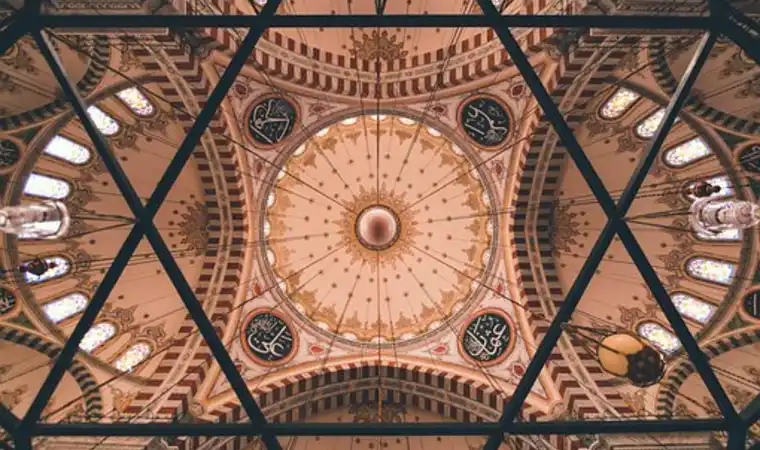
Islamic civilization stands as one of the most influential cultural and intellectual traditions in human history, spanning over fourteen centuries and three continents. It produced foundational advances in medicine, mathematics, philosophy, and law that directly shaped the modern world. Understanding this civilization requires engaging with its primary sources — the Quran, hadith literature, and the works of classical scholars — rather than relying on secondary summaries alone.
What Is Islamic Civilization
Islamic civilization refers to the cultural, intellectual, legal, artistic, and spiritual achievements produced by Muslim communities from the 7th century onward. It is not geographically limited to the Arabian Peninsula. At its peak, it stretched from Iberia to Central Asia, and its influence reached sub-Saharan Africa, South and Southeast Asia, and medieval Europe.
The civilization is distinguished by several core features:
- A written tradition grounded in the Quran and Sunnah
- A legal framework (Sharia) derived through systematic jurisprudence
- A scholarly class (ulama) responsible for transmitting and interpreting knowledge
- A cosmopolitan culture that absorbed and synthesized Greek, Persian, Indian, and Byzantine learning
The Founding Period: 7th to 8th Century
The Prophet Muhammad received the first Quranic revelation in 610 CE. By 632 CE, the Arabian Peninsula was unified under Islam. Within a century, Muslim armies had reached Spain in the west and the borders of China in the east — one of the fastest geopolitical expansions in recorded history.
Key dates in the founding era:
| Year | Event |
|---|---|
| 610 CE | First Quranic revelation in Mecca |
| 622 CE | Hijra (migration) to Medina — start of Islamic calendar |
| 632 CE | Death of the Prophet; Abu Bakr becomes first caliph |
| 661 CE | Beginning of Umayyad Caliphate; capital moves to Damascus |
| 750 CE | Abbasid Caliphate begins; capital later moves to Baghdad |
This period established the political and religious structures that would shape all subsequent Islamic civilization. The collection and verification of hadith — the recorded sayings and actions of the Prophet — began in earnest during this era, forming the second foundational pillar of Islamic jurisprudence and ethics after the Quran.
The Golden Age: 8th to 13th Century
The Abbasid period, particularly between 750 and 1258 CE, is consistently described by historians as the Islamic Golden Age. Baghdad under Caliph Harun al-Rashid and his successors became the largest city in the world outside China, with a population estimated at 1 million by 900 CE.
The House of Wisdom (Bayt al-Hikma), established in Baghdad around 830 CE, employed translators, scientists, and philosophers from across the known world. Works by Aristotle, Galen, Euclid, and Ptolemy were translated into Arabic and then systematically expanded upon.
Contributions by field:
| Field | Scholar | Contribution |
|---|---|---|
| Medicine | Ibn Sina (Avicenna) | Al-Qanun fi al-Tibb — used as a medical textbook in Europe until 17th century |
| Mathematics | Al-Khwarizmi | Developed algebra; his name gave English the word "algorithm" |
| Optics | Ibn al-Haytham | First systematic theory of vision; precursor to modern scientific method |
| Philosophy | Al-Farabi | Synthesized Aristotle with Islamic theology |
| Geography | Al-Idrisi | Created one of the most accurate medieval world maps (1154 CE) |
| Astronomy | Al-Battani | Calculated the solar year to within minutes of modern measurements |
This was not passive transmission of ancient knowledge. Islamic scholars corrected, expanded, and in many fields entirely superseded what they inherited.
The Role of Hadith in Islamic Civilization
Hadith literature is not merely religious instruction — it is the backbone of Islamic law, ethics, biography, and historical method. Every authentic hadith carries a chain of transmission (isnad) naming each narrator from the Prophet to the compiler. This system of verification, called ilm al-rijal (science of narrators), is among the most sophisticated biographical and source-critical methodologies produced by any pre-modern civilization.
The six canonical Sunni hadith collections (Kutub al-Sittah) were compiled in the 9th century:
- Sahih al-Bukhari — compiled by Muhammad al-Bukhari (died 870 CE)
- Sahih Muslim — compiled by Muslim ibn al-Hajjaj (died 875 CE)
- Sunan Abu Dawud
- Jami al-Tirmidhi
- Sunan al-Nasa'i
- Sunan Ibn Majah
Al-Bukhari reportedly examined 600,000 hadith reports and accepted approximately 7,275 as authentic. This level of critical filtering has no parallel in any other ancient religious tradition. The hadith corpus covers not only ritual practice but also commercial transactions, interpersonal ethics, environmental stewardship, governance, and medical advice.
Islamic Law and Jurisprudence
Islamic jurisprudence (fiqh) developed into four major Sunni schools by the 10th century, each named after its founding scholar:
| School | Founder | Primary geographic presence today |
|---|---|---|
| Hanafi | Abu Hanifa (died 767 CE) | South Asia, Central Asia, Turkey |
| Maliki | Malik ibn Anas (died 795 CE) | North and West Africa |
| Shafi'i | Al-Shafi'i (died 820 CE) | East Africa, Southeast Asia, Egypt |
| Hanbali | Ahmad ibn Hanbal (died 855 CE) | Arabian Peninsula |
Each school applies the same primary sources — Quran and hadith — but differs in methodology for analogical reasoning (qiyas) and scholarly consensus (ijma). A Muslim traveling from Istanbul to Kuala Lumpur operates within the same legal tradition expressed through different regional methodologies.
Islamic Ethics and Spiritual Tradition
Islamic ethics derives directly from Quranic commands and prophetic hadith. The concept of akhlaq (moral character) is central — the Prophet described his mission as perfecting moral character. Classical ethical texts like Al-Ghazali's Ihya Ulum al-Din (Revival of the Religious Sciences, 1095 CE) organized Islamic moral life around four pillars: acts of worship, social conduct, destructive traits, and saving traits.
Key ethical principles sourced from hadith:
- "None of you truly believes until he loves for his brother what he loves for himself." (Bukhari, Muslim)
- "The most beloved of deeds to God are those done consistently, even if they are small." (Bukhari)
- "God is kind and loves kindness in all matters." (Bukhari)
- "Cleanliness is half of faith." (Muslim)
These are not abstract principles. They generated specific legal rulings, social norms, and medical practices. The prohibition of interest (riba), the institution of zakat (obligatory charity set at 2.5% of accumulated wealth annually), and detailed contracts of partnership in commerce all derive from this ethical-legal integration.
The Decline of the Classical Period and Its Aftermath
The Mongol sack of Baghdad in 1258 CE destroyed the Abbasid Caliphate and the House of Wisdom. This is often cited as the end of the Golden Age. However, Islamic civilization did not collapse — it reconstituted. The Ottoman Empire (1299–1922 CE) revived large-scale political organization. The Safavid Empire developed Shia scholarship in Iran. The Mughal Empire in South Asia produced some of the most sophisticated architecture and administrative systems of the early modern world.
The colonial period (roughly 1800–1960 CE) disrupted traditional educational institutions (madrasas), legal systems, and scholarly networks. Recovery and reformulation of Islamic intellectual tradition is an ongoing process in 2026, with significant debates about methodology, modernity, and textual interpretation taking place in universities, mosques, and online platforms across the Muslim world, which numbers approximately 1.9 billion people.
Islamic Civilization and the Modern World
Contemporary Islamic civilization is not monolithic. It spans 57 member states of the Organisation of Islamic Cooperation, dozens of major languages, and radically different political systems. What unifies it is shared textual tradition — the Quran, the hadith collections, and the classical scholarly heritage.
Areas where Islamic civilization actively engages contemporary questions:
- Islamic finance: a sector valued at over $3.5 trillion globally in 2024, operating on profit-sharing rather than interest
- Bioethics: Islamic medical ethics committees issue fatwas on organ transplantation, genetic research, and end-of-life care
- Environmental ethics: classical concepts like hima (protected land zones) and the principle that "the Earth is a mosque" inform contemporary Muslim environmentalism
- Education: Al-Azhar University in Cairo, founded 970 CE, remains one of the world's oldest continuously operating universities
Study notes
Questions readers ask
What is the difference between a hadith and the Quran?
The Quran is the direct word of God as revealed to the Prophet Muhammad and preserved exactly as revealed. Hadith are records of what the Prophet said, did, or tacitly approved — compiled by scholars after his death using rigorous chains of narration. Both are authoritative in Islamic law, but the Quran holds absolute precedence. A hadith cannot contradict a clear Quranic ruling.
When did Islamic civilization begin?
Conventionally, 622 CE marks the beginning — the year of the Hijra, which is year 1 of the Islamic calendar. However, the intellectual flourishing associated with Islamic civilization developed over the following two centuries as the community expanded, encountered other scholarly traditions, and developed its own systematic disciplines of law, theology, and science.
How did Islamic civilization influence medieval Europe?
Primarily through translation. From the 10th to 13th centuries, Arabic texts were translated into Latin in Toledo, Sicily, and Antioch. Works by Ibn Sina, Al-Ghazali, Ibn Rushd (Averroes), and Al-Khwarizmi entered European universities and directly shaped scholastic theology, medicine, and mathematics. The numerals used globally today — including in this article — are called "Arabic numerals" because Europe received them through Arabic-language scholarship.
What role do Islamic scholars (ulama) play today?
Ulama remain the primary interpreters of Islamic law and hadith in 2026. They issue fatwas (legal opinions) on contemporary questions, run religious education institutions, and lead Friday prayers. Their authority is textual rather than institutional — a scholar's opinion carries weight based on demonstrated mastery of the sources, not an appointment from a central religious body. This decentralized structure means significant diversity of opinion exists across regions and traditions.